Showing posts with label fine dining St. John's. Show all posts

J Korean

J Korean
194 Duckworth Street
St. John's, NL
●●●●●●●●○○
8 out of 10

Korean

Korean cuisine and I get along. Ever since I lived in Koreatown in Toronto I've made a habit of scouring Korean menus and church bazaars in search of home-made, high-quality, spicy marinated vegetables and meat. Meals in even the cheapest and most humble Korean restaurants are served with a side of steamed rice, a true comfort even when your meal is a soup.

Korean food generally breaks down into beef (or seafood and sometimes pork or tofu) in the following forms: Grilled, soups, stews, and noodles. Kimchi and assorted banchan (side dishes - mostly pickled or marinated vegetables) are served on the side and are brought at the beginning of the meal, usually with a clear broth miso soup.
House-made kimchi (fermented cabbage, below) and marinated root vegetable (sweeter than a potato) of some kind in a sticky sweet sesame sauce
Most places re-fill them for free, like an empty water glass). Korean BBQ is hugely popular in Canada's major cities, and the only reason J Korean in St. John's hasn't adopted the concept of setting a DIY-barbecue down on every table that orders grilled meat (or building one into the table itself) is because of fire codes in old downtown heritage buildings.

And the city is better off for it, because give a Newfoundlander a chance and he'll char his $25 marinated galbi beef ribs to a crisp, and that's a sin.
St. John's Galbi Jeonsik: Barbecued marinated beef short ribs on hot plate with special sauce, lettuce, and rice

For the Korean food novitiate start with the bulgogi (if you like beef), the pork bone soup if you like spicy, and Haemulpajeon korean-style pancake if you like seafood, and the bibimbap if you're vegetarian (go with the kimchi jigae vegetable version if you're vegan). I vote for the bulgogi over the obviously delicious marinated ribs simply because of the price. The bulgogi is $8 less than the ribs ($27.50, though somehow marked down to $16 at lunch, while the bulgogi only drops $4), so if you don't like the special sauce that comes with it, you'll be less disappointed. If you like sweet and spicy, however, you'll love the sauce. It basically makes the dish. The bulgogi is also BBQ-ed marinated meat, but it's cut up finer and served with green peppers and onions on a very heavy hot plate that continues to cook the items after they're placed on it. The trick here is to take some (or all, if you like) of your rice and put it on the hot plate. the rice then browns and gets a crisp crust. In Korean food (and Asian in general) texture is very important, so you just added an extra texture to your otherwise chewy and soft meal. You might be staring at your plain lettuce leaves and wondering if the kitchen forgot the salad dressing, but no, just pour the sauce on top of the beef, mix it up, and wrap the lettuce around pieces of the beef to create little parcels that you can pop in your mouth. 

The bibimbap ($15.50) was the best thing I ate here, all thanks to the sauce. It wasn't too spicy but had real depth and a balance of sweet and almost verging on smoky (and tasted almost meaty). You can see the bottle of rooster sauce in the kitchen (Sriracha hot sauce - the kind in the big plastic bottle that's red with a green tip at the top) but the sauce tasted much fresher than that. The rice-based dish comes in a stone bowl (get the stone bowl version, not the stone-less version - it's just more fun this way and you'll end up with some crusty rice without even trying), and is topped with marinated vegetables including carrots and cucumbers, and either topped with meat and then a fried egg, or just the egg. The egg will be soft and you can break it over the vegetables and rice and stir it around to let the stone bowl cook it into the dish, kind of like a do-it-yourself fried rice but with a much, much, much better sauce. The chicken version didn't really add much to the dish, as it had no real flavour, but in Korea bibimbap is known as a healthy, even diet meal. That's all relative to the huge amount of beef, though.

Other lighter options are the soups. Soup is served with most meals, but a meal of soup is a satisfying specialty. Most are spicy broths laced with crushed chili powder or Sriracha sauce (often you'll have a bottle on the table to add your own, but not here as plastic definitelry does not match the fine-dining decor). Above, julienned vegetables hide a mountain of homemade udon noodles (thick wheat-flour noodles) and are topped with mussels, squid pieces, and shrimp. Squid is a very common Korean seafood choice (you won't find a whole lot of traditional salmon or white fish) and they're also very affordable (as are the mussels). The broth was perfectly warmed but not boiling, so the noodles never got to the mushy, over-cooked stage. The noodles themselves were a good texture, but I couldn't really taste them in the spicy soup. Next time I'll try them stir-fried. The broth here was just fine but just couldn't be as intense as the sauce for the meat dishes and bibimbap because the broth dilutes it. Maybe you should request some sauce on the side for your rice. It's not traditional Korean to eat it that way, but that's what my tastebuds wanted.

The vegan option I gave above of kimchi jigae ($15.50) is a large soup served in a traditional silver bowl of broth flavoured by the pickled, fermented cabbage (the flavouring seeps into the soup and the cabbage becomes very mild), soft cubes of tofu, and mixed vegetables. I originally tried the version that was just a bean paste broth (Doenjang Jigae - $15.50), but it was pretty bland. So I poured in some of the kimchi from the banchan (don't tell...) and suddenly there was flavour.
 So what do you do if you don't like spice? Get out of a Korean restaurant!

No, just stick to the sesame-oil based dishes like the seafood pancake and the japchae ($14.50). Japchae is ridiculously easy to make. You take potato starch noodles (or sweet potato or yam noodles - perfect for those with wheat and gluten problems), warm them in hot water with some dried mushrooms (not even boil) until they're translucent (the noodles, not the mushrooms), add some carrots, onion, green onions, spinach and sesame seeds and toss it all with a slightly salty, sweet and savoury sauce of soy, sesame oil, sugar, and maybe some pepper. The trick is the get the ratio of salty, sweet, and savoury in the sauce correct. You can also make it better by toasting the sesame seeds and using a toasted sesame oil. It also needs to be made fresh so that the noodles don't harden or get soggy and cover the flavour of the sauce. So japchae for $14.50 is a bit overpriced unless you get it with beef. That will also add some more "savoury" to the dish, but it's often vegetarian for a "light" lunch ("light" meaning simple, quick, and easy to digest, not "low-fat" - there's a WHOLE lot of delicious sesame oil in there).
Korean sushi isn't exactly like Japanese sushi (or what we think of as "Japanese" maki rolls, but are really North American inventions, ie the California Roll). It's not better or worse, just different. Sushi from the Korean grocery store near my Koreatown apartment in Toronto consisted of pickled vegetables (spinach and carrots and cucumber, not always the standard ones your'd find in Japanese sushi) combined with sweet egg, so that all the rolls were huge and sesame-flavoured and sweet before you even thought of adding soy sauce. They were also dirt cheap because there was no meat in them. At J Korean there are some standard North American-type rolls, the kinds of rolls you'll find at Sun Sushi, but there are some other options. And that's great because variety is the spice of life. In fact, spice is the main difference. Well, that and beef. The J.K.K. Gimbab ("gimbab" - or "gimbap" - means Korean sushi) contains vegetables and beef and most of the other rolls are served spicy, from the kimchi option to the salmon option. You will also find standard volcano, dynamite, spider, and dragon rolls of deep-fried shrimp, avocado, cucumber, and fish eggs ($15.50). You can splurge on the lobster gimbab ($19.50) that's basically the same but with breaded, fried lobster instead of shrimp. So the rolls are pretty expensive, though at lunch they're about on par with Sun Sushi.
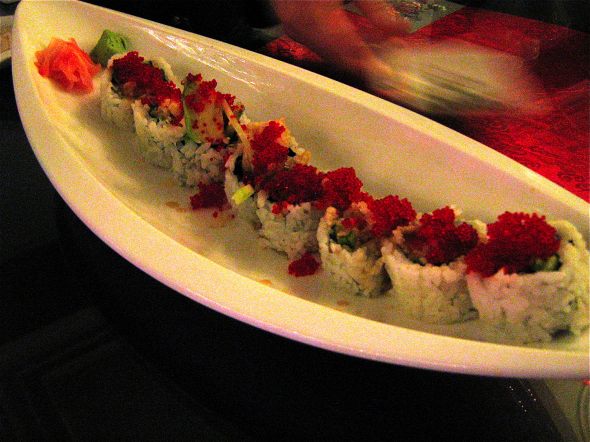
So this is a special occasion place, or a nice lunch place. A big bowl of soup will get you through the rest of the afternoon, and a plate of ribs or beef with rice and side dishes will warm you up on a cold evening. The endorphins (and romantic decor) from the chilies make it the perfect place for a date as long as you don't have a runny nose, and that heavenly special sauce on the bibimbap will bring you back when you want a healthy meal served in a giant stone bowl and all the marinated and sweet pickled side dishes you want. The perfect ending is the traditional tea with pine nuts and dates, served with ginseng candies (soft, miraculously savoury-sweet bites) and crisp, airy rice cookies that start to become chewy once they hit the warm tea...

Congratulations, St. John's. Another restaurant winner.

J Korean
Where: 194 Duckworth Street
St. John's, NL
709-579-1133
When: Mon-Fri noon-10:30pm, Sat-Sun 3pm-10pm
How Much: $20 at lunch, $35-$60 including an appetizer, main, tax and tip at dinner

Atlantica

Atlantica
38 Beachy Cove Road
Portugal Cove, NL

9 out of 10

I have as many compliments for this restaurant as the Executive Chef has tattoos...

Starting at the arm, moving to the leg:
1. The scenery. Step into the dining room and immediately be overwhelmed by a window spanning the length of the room overlooking Portugal Cove. As the sun sets over the course of the meal, the Belle Island ferry looks like a slow-moving candle on the dark water, making its way from shore to shore. As hours slip by, the ferry's crossings become the sole mark of the evening's passing.

2. The service. Polite, helpful, and respectful. Does that count for 3 tattoos? Not many servers are able to satisfactorily describe various cooking methods of the chef. Onion soubise, a béchamel-type sauce of slow-cooked puréed onions, to accompany pan-seared Nova Scotia sea bass with braised fennel, tomato confit, candied lemon and balsamic vinegar. Thank you for the balance between knowledgeable attention and respectful distance.

3. Devotion to local products. While Quebec isn't exactly close by, the elk and fois gras that grace the menu travel less than the New Zealand lamb that is found in most St. John's restaurants. Atlantica takes only baby steps outside of the city for theirs. Also, much of their produce comes from just down the road at The Organic Farm, the owners of which were present at this meal. They immediately identified their small pea tendrils being used as garnish on the plate of the maple-smoked duck breast appetizer. A verdict was not reached on whether the spaghetti squash that served as bed for the wild yellow fin tuna was theirs as well. My guess is that the farm's mint fell in love with the local lamb and ran away together to Chef Vardy's kitchen to be served in a spice-crusted rack of the meat with kalamata olives. The olives had a much longer journey to get to the kitchen.

4. Respect for tradition, with a splash of innovation. Beautifully-presented veal osso buco braised in red wine is updated by adding saffron to the sauce itself instead of the usual risotto accompaniment. In fact, Atlantica serves the meat instead with new potatoes. While the orange and yellow-hued spice loses its job of colouring the pool of risotto, it's a nice touch to see its presence maintained in the dish even if Vardy prefers to support the potato over the success of all the local rice paddies...perhaps a good choice.

5. Not a disappointment, despite the large shoes to fill. The exceedingly competent kitchen staff (who are respectfully listed on the menu alongside the Executive Chef) has, I'm sure, helped ease the restaurant's transition between departed chef Jeremy Charles and the man who inherited his kitchen. A unique shooter glass amuse-bouche still appears at the beginning of the evening, and the blind tasting menu is still featured with or without wine pairing, but Vardy's use of oriental flavours sneak into the meal when you least expect it (without pushing into the abused realm of Asian fusion), through the yuzu citrus sauce delicately gracing one of the three raw tuna offerings of the "cru" plate appetizer, the sriracha hot sauce that adds a kick of heat to the impossibly thin and flavourful venison carpaccio, and the beetroot and ginger pachadi that spins sweetness and spice into a Newfoundland chutney.

There are moments when I wish I could drink cream, like when the amuse-bouche is a layered shot of consommé and puréed celery root. The dairy-free version cried out for the sweet cream in which it was meant to drown, and cruel garlic, maybe lemon, and the natural bitterness of the vegetable won out. The beautiful layering of the glass was also lost, having no colour change or extra ingredient to separate the purée at the bottom from the broth at the top. Still, the effect of the liquid texture followed by the mash was different, though it made me think that shots of wheatgrass at organic juice bars should always be served with cream, as those at the table who could digest milk were very satisfied with the start of their meal.

6. The bread. Fennel and dried apricot. A gorgeous crust and refreshing flavour on its own, made even better by intoxicating olive oil and thick balsamic. Unfortunately I think the sweetness of the first thing to touch my lips made the celery root seem more bitter by comparison. Perhaps I wouldn't resent not being able to drink cream so much if the bread has been less good.

7. The wine list. I love it when I don't recognize many of the bottles. I also love a broad range of prices and a decent amount of options served by the glass. These are well-chosen bottles that form a list that I am no where near qualified enough to critique, especially not having tried the blind tasting menu with wine pairing ($80 for 6 courses, plus $50 for the pairing). I strongly doubt that a requested recommendation here would not be intelligently suited to your meal.

8. The appetizers. The aforementioned venison carpaccio seemed overly lemony at first, but with each bite the lemon relinquished control and in came peppercorns and the flavour of the meat itself. Thin slices of duck breast were outshone by their accompanying drops of beet sap (yes, sap, not juice) on individual drops of truffle oil that enhanced the earthy maple flavour of the breast. Of all the things cooked in fat that weren't duck, the pear confit was certainly the most unique, and was a smart combination with honey and mild sweetbreads. The tuna three-ways was incredibly fresh, but only the sauce of soy, sesame, sugar, karashi (crushed mustard seeds) and a myriad other ingredients could bring out any flavour in the fish itself. If only we lived on the other side of the country, this dish would have been spectacular.

Then, fois gras. The "control fed" duck had no idea how delicious it would become. Both Quebec and Atlantica certainly knew. No need for the accompanying poached pear, but a perfect choice with the pancetta chip for pork-based saltiness to complement the incredible smoothness of each bite as it disintegrates on your tongue.

9. The mains. Celery root comes back with the Black Angus tenderloin. Cultivated mushrooms inhale the reduced and then reduced some more veal and wine-based Bordelaise sauce. The osso buco and its oyster mushrooms have nothing on the concentrated flavour of this sauce. Throw in some truffle butter just in case you thought it wasn't ridiculously gluttounous enough as it was.
The sea bass was seasoned and seared. That was all. The strong accompaniments demonstrated the versatility of the fish, giving the option of combining each bite with acidic tomato (instead of sweet), sweet lemon (instead of acidic) or rich balsamic (sweet and acidic, yet a strong contrast from the tomato and lemon).

Again I found the tuna suffered, not through any fault of the accompanying flavours, but because of the fish itself. It was nicely torched on the outside and rare on the inside, and the simplicity and freshness of the meal are to be appreciated (photo at top).

Back to Asia with pork belly. Slow-cooked in sweet, Japanese sake-based liquid, the pork fat breaks down and locks the moisture into the meat along with the clean, alcoholic warmth of the rice wine. Atlantica's belly is given a crisp crust on top and bottom of the melting moisturizing layer and tender meat layer. The varying textures turn the dish into a savoury mille-feuille-style tiered pastry. The caramelized scallops are certainly not to be ignored in the same dish, but can't stand up to the salty sweetness of the pork. They do appear beautifully placed on sprouted lentils and topped with the Organic Farm's baby sprouts. Some may find the pork to consist of too much fat and not enough meat, and in this case the dish will happily win you over with the cardamom carrot purée. Light as a feather, this sweetness stands up well to the pork.
I really didn't need the elk sirloin in my dish of braised shallots, cabbage, parsnip and spaetzle. Like the "hand-crafted" gnocchi that accompanied the chicken breast and little grey snails, the "hand-thrown" spaetzle combined eggs and flour (without the potato) to create fluffy pillows of dough. I admit to knocking the elk off the other ingredients root out more shallots that had absorbed the meat's reduced tarragon-juniper sauce. I swear I don't even like gin and tonic but the juniper berry flavour was subtle compared to the sweetness that burst from the braised onions. I really don't understand how cabbage can taste that good. I would happily be vegetarian except that the meat's juices are what flavour the vegetables. Deep-fried shallot slivers to garnish were the only touch reminiscent of Asia in this dish, bringing me back to meals of Indian biryani and roasted leg of lamb. The elk, however, had nothing to do with long-stewed pieces of inexpensive cuts of meat, and everything to do with the North American dream of a lean, perfectly-cooked medium-rare steak.
10. Dessert. There are times when it's very nice to be lactose-intolerant. As much as I would have loved to try the Chef's favourite dessert, his lemon tart, I wouldn't have been treated to the only zabaglione I've ever been able to eat. The traditional combination of egg yolks, sugar and sweet wine is often made with cream. The traditional version presented this evening, however, stood true to its milk-free roots and only substituted champagne for the Italian prosecco. Who am I to complain? A very generous portion of the custard sat atop fresh blackberries, sweet strawberries and nice blueberries (I'm sure they would be from Newfoundland if it were summer). I knew egg whites could be light as air, but between the "hand-thrown" German spaetzle and Italian zabaglione I am impressed by what a good hand can do with yolks. Mayonnaise will feel like a waste from now on.

11. According to this meal, Europe and Asia are the royalty of cooking techniques, but Eastern Canada can be very proud of its local foods that emulsify so beautifully with the age-old techniques. New traditions and old. Contemporary and romantic.

I didn't end up getting a clear answer on exactly how many tattoos the Chef has. If he has any more than 11, or decides to get any more, I suppose I'll just have to return for another dinner.

Expect to Pay: $60-$90 a la carte, including tax, tip and a glass of wine; $117 6 course blind tasting menu, including tax, tip and a glass of wine; $169 blind tasting menu with wine pairing, including tax and tip
Hours: Tues-Sat, dinner only, reserve 2-3 weeks in advance
(709) 895-1251